
The Ultimate Outdoor Storage Shed Guide: 50+ Backyard Shed Ideas, DIY Plans, Interior Storage Tips & The Best Sheds for Every Home

Outdoor storage sheds occupy a unique space between architecture, landscape design, and everyday household utility. While often viewed simply as garden accessories, Seunghwan et al, 2021 in their research into building materials, thermal performance, durability, and environmental exposure showed the intricacies and complexities gradually shaping how modern outdoor storage is designed and used. Today’s outdoor shed and storage is influenced by developments in polymer science, timber engineering, prefabrication systems, and small-structure ergonomics.
Using accredited research findings, technical guidance, and industry-backed evidence we are going to explain how outdoor storage sheds function as built structures, how they can be designed and constructed effectively, and how homeowners can maximise their usefulness through layout, landscaping, and material choices.
Outdoor Storage Sheds in Research and Modern Building Practice
Outdoor metal storage sheds fall under the category of lightweight auxiliary structures. The journal of building engineering highlighted research into small-scale building envelopes—particularly timber framing and lightweight wall assemblies—showing significantly contributions to how sheds perform thermally and structurally.
Experimental studies into wood-frame wall systems show that material combinations with higher thermal mass and appropriate surface treatments improve internal temperature stability and environmental performance, illustrating why timber remains popular for small outbuildings intended for workshops or hobby spaces rather than simple storage.
At the same time, advances in polymers such as high-density polyethylene (HDPE) and PVC have introduced weather-resistant, low-maintenance alternatives. These materials are resistant to rot, rust, and moisture, addressing long-standing issues associated with outdoor storage shed for trash cans exposed to rain and soil moisture.
Research and industry analysis consistently identify three performance priorities in outdoor storage design:
-
resistance to environmental exposure (UV, moisture, wind)
-
structural stability relative to weight
-
internal environmental control (ventilation and temperature)
The balance between these factors drives most design decisions discussed in later sections.

Outdoor Storage Shed Interior Ideas: Function Driven Design
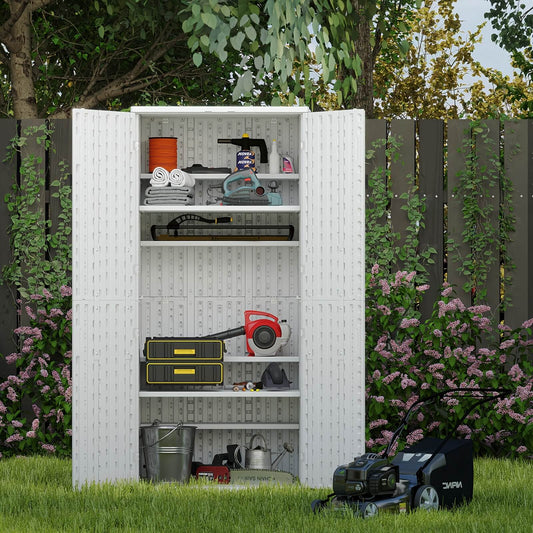
The interior of a small or large outdoor storage shed determines whether it functions as clutter storage or an efficient extension of the home. It is our experience that small-space ergonomics and workshop layout emphasizes vertical storage and zoning, particularly where floor area is limited.
A well-designed shed interior typically follows the principle of accessibility hierarchy: frequently used tools near the entrance, seasonal or heavy items deeper inside, and rarely used items elevated or overhead. Vertical wall systems, pegboards, and shelving make use of otherwise wasted space, especially in smaller sheds where footprint is restricted.
Lighting and ventilation are also critical. Plastic storage shed outdoor, for example, are known to retain heat more readily than timber structures, meaning airflow or passive ventilation becomes important when storing temperature-sensitive items.
Modern interior ideas increasingly treat sheds as multifunctional spaces. Many homeowners now incorporate small workbenches, charging stations for tools, or even hobby zones. This trend reflects the broader movement toward micro-workspaces and garden-based activity spaces rather than purely storage-focused buildings.
Outdoor Storage Shed as a DIY Activity
The rise of prefabricated kits and modular building systems has made shed construction one of the most common DIY building projects worldwide. The best plastic sheds are designed with interlocking panels or snap-together systems, allowing assembly without specialist tools.
DIY construction appeals for several reasons:
First, it reduces labour costs and allows customization of layout and foundation preparation. Second, the project itself offers skill-building in basic carpentry, levelling, and weatherproofing techniques. Third, a self-built shed can be adapted to site-specific constraints such as uneven ground or limited access routes.

However, industry guidance and internationally accepted best practice consistently emphasizes foundation preparation as the most critical stage. A level base—whether concrete, paving slabs, or compacted gravel—prevents structural distortion and prolongs the lifespan of lightweight materials.
DIY projects also highlight a key difference between materials: wooden outdoor storage sheds allow significant modification during construction, while plastic sheds tend to be less adaptable once assembled due to structural panel limitations.
Outdoor Shed Storage Ideas: From Utility to Lifestyle Space
The modern outdoor shed has expanded beyond tool storage into several functional categories:
-
traditional garden storage
-
bicycle and equipment housing
-
hobby workshops
-
outdoor offices
-
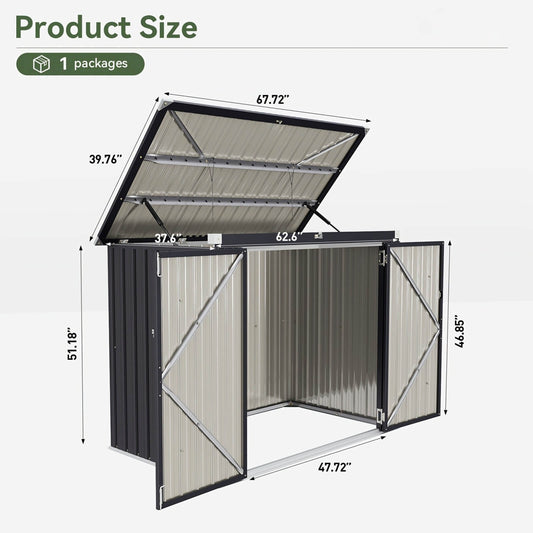
bin or utility concealment structures
Design ideas increasingly prioritise integration with lifestyle patterns. Narrow sheds are often used along boundary lines to maximise garden space, while larger footprint sheds may incorporate windows and insulation for extended occupancy.
The shift toward multi-purpose sheds aligns with broader housing trends where outdoor space supplements indoor living, particularly in urban environments where interior square footage is limited.
Landscaping Around Outdoor Storage Sheds
Landscaping transforms a shed from a utilitarian object into a cohesive part of the garden. The main design objective is visual integration.
Planting shrubs, climbing plants, or raised beds around a shed softens the structure’s visual impact while improving microclimate conditions. Vegetation can provide wind buffering and shade, reducing UV exposure—an important consideration for plastic materials that may degrade or fade under prolonged sunlight exposure.
From a functional perspective, landscaping should also maintain airflow around the structure. Leaving small clearances prevents moisture buildup against walls and reduces mould risk. Drainage planning is equally important; plastic or metal storage sheds positioned in low-lying areas experience faster material deterioration regardless of construction type.

Outdoor Storage Shed Building Plans and Structural Considerations
Building plans for outdoor storage shed typically follow simplified architectural principles derived from residential construction:
-
load transfer through wall framing or panel systems
-
sloped roofing for water runoff
-
ventilation to prevent condensation
-
elevated flooring to avoid ground moisture
Timber-framed sheds offer the greatest flexibility in design plans. They can be scaled, insulated, or altered to include windows and doors with relative ease. Plastic sheds, by contrast, rely on engineered panel systems that distribute loads differently and often require adherence to manufacturer specifications.
Wind load is one of the most underestimated design factors. Lightweight structures must be anchored securely to foundations to prevent movement, particularly in exposed gardens.
Vertical vs Outdoor Horizontal Storage Shed: Which Is Better?
The distinction between vertical and horizontal sheds is primarily spatial rather than structural. Vertical sheds maximise height while minimising footprint, making them suitable for smaller gardens or side passages. Horizontal sheds spread storage across a wider area, improving accessibility for bulky equipment such as lawnmowers or bicycles.
A vertical outdoor storage shed encourage organized storage systems but can make heavy items harder to access safely. Horizontal sheds reduce stacking requirements but consume more ground area.
From an efficiency perspective, vertical sheds are better where land is limited, while horizontal designs are better suited to frequent access and heavier equipment storage. The choice therefore depends less on structural superiority and more on user behaviour and garden layout.

Advantages and Disadvantages of Plastic Sheds for Backyard Storage
Plastic sheds represent one of the most significant material developments in outdoor storage over the past two decades. Their performance characteristics arise directly from polymer engineering.
Advantages
Plastic sheds are valued for their low maintenance requirements because they do not rot, rust, or require painting. Modern plastics resist moisture, pests, and mould, making them particularly suitable for damp climates.
Their lightweight nature simplifies transportation and assembly, which explains their popularity among DIY users. Many plastics also provide UV resistance and weatherproofing, helping preserve structural integrity over time.
Disadvantages
Despite these advantages, plastic sheds generally have lower structural strength than timber or metal alternatives. Thin panels may warp or crack under extreme weather conditions or heavy loads.
Heat retention is another common issue. Plastic absorbs and holds heat, potentially creating uncomfortable interior conditions without ventilation.
Customization limitations are also significant. Plastic panels are difficult to modify, making shelving, windows, or structural changes harder to implement compared with wood.
Security can be weaker as well, since lighter materials are easier to damage than solid timber or reinforced metal structures.
In practical terms, plastic sheds perform best when used for general storage rather than workshops or heavy equipment housing.

Best Backyard Storage Sheds
When evaluating what makes a shed “best,” it is always best to stay focused on performance criteria rather than brand or style. The most effective backyard storage sheds share several characteristics:
They are appropriately sized for intended use rather than maximising capacity unnecessarily. Oversized sheds often suffer from poor internal organisation and ventilation problems.
They use materials suited to climate conditions. Plastic performs well in wet environments with minimal maintenance needs, while timber offers superior adaptability and insulation potential.
They incorporate ventilation, natural lighting, and secure anchoring systems. These factors significantly extend service life and usability.
High-quality modern sheds increasingly blend materials—plastic panels with steel reinforcement or timber frames with composite cladding—to balance durability, aesthetics, and ease of maintenance.
How To Create A Multi-Purpose Space With A Custom Shed
Creating a multi-purpose space with a custom shed begins with applying principles from small-building research and flexible workspace design, where the goal is to allow one structure to support multiple activities without compromising comfort or efficiency. Studies into activity-based workspaces show that environments function best when spaces are organized around user needs and environmental preferences rather than fixed functions, meaning layouts should allow different activities—such as storage, work, or relaxation—to coexist through zoning and adaptable furniture rather than rigid partitions.
In practice, this translates into dividing a custom built shed into functional zones using vertical storage, fold-down work surfaces, and modular furnishings so the same floor area can change purpose throughout the day. Its our experience that small-scale buildings and tiny houses should have ventilation, insulation, and passive cooling strategies that are essential to maintain comfort in compact structures, ensuring the shed remains usable as a workspace or hobby area rather than becoming overheated or damp.

When a shed is designed around environmental performance first—natural light placement, airflow paths, and thermal stability—the space becomes inherently flexible because it supports both storage and human occupancy comfortably.
Equally important is the structural and design approach used when customizing the shed itself. Architectural research into modular timber construction highlights how lightweight, prefabricated or kit-of-parts systems enable buildings to be adapted or reconfigured over time, supporting changing uses without requiring major reconstruction.
This principle applies directly to custom design sheds: internal layouts should be planned for evolution, allowing a storage area to later become a workshop or office as needs change. Real-world outbuilding design guidance similarly emphasizes flexibility as the core advantage of auxiliary structures, noting that sheds can extend living space by accommodating multiple roles—from storage to creative work—when thoughtfully designed around circulation, lighting, and access.
By combining adaptable interiors with efficient building envelopes and modular construction thinking, a custom shed can function as a true multi-purpose environment—one that maximizes limited outdoor space while remaining practical, comfortable, and future-proof.
The Future of Outdoor Storage
The future of outdoor storage sheds lies in material hybridisation and environmental performance. Research into lightweight wall systems, thermal regulation, and sustainable materials suggests that small structures will increasingly borrow technologies from larger building sectors.
Expected developments include improved UV-resistant polymers, insulated composite panels, and modular designs that allow expansion or reconfiguration over time. As outdoor spaces continue to serve as extensions of the home, sheds are evolving from simple storage units into adaptable micro-buildings.
Conclusion
Outdoor storage sheds represent far more than garden accessories. Their design intersects with material science, environmental engineering, and spatial planning. The best results come from aligning material choice, structural design, and intended use rather than focusing solely on appearance or cost.
Whether approached as a DIY project, a landscaping feature, or a practical storage solution, the modern outdoor shed demonstrates how small-scale construction continues to evolve through research and innovation—transforming a simple backyard structure into a highly functional part of domestic life.